

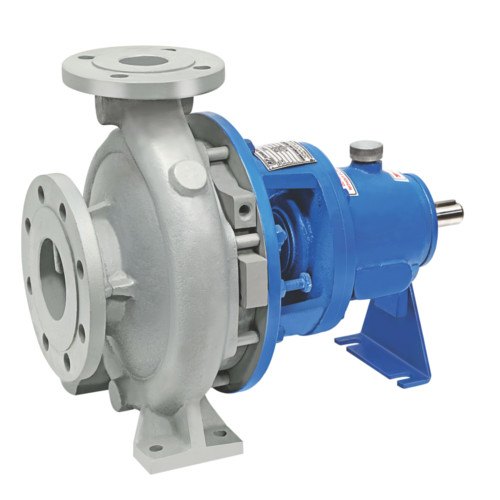
 Cavitation-
Cavitation can be occurred when the pump suction contains air or when the pump is running faster than the designed speed.
Low pressure regions occur in the flow at points where high local velocities exist. If vaporisation occurs due to these low pressure areas then bubbles occur, these expand as they move with the flow and collapse when they reach a high pressure region.
Such formation and collapse of bubbles is very rapid and collapse near a surface can generate very high pressure hammer blows which results in pitting, noise, vibration, and fall off in the pump efficiency.
So the pump should be run at designed speed and throttling of the suction valve should be avoided.
How to no water come from ballast Pump ?
1) Incomplete priming
2) Too high suction lift
3) Low net positive head
4) Air leaks in suction line
5) Gas or air lock
6) Suction filter choke
Screw pump overhaul
1) Remove fuse from motor starter box
2) Close suction and discharge valve
3) Remove suction and discharge pipe flange bolt & nut, coupling bolt of motor coupling
4) Remove pump foundation bolts & take out pump from motor
5) Remove gland nut, take out gland & gland packing and neck bush
6) Remove cover both side & remove driver screw & driven screw with bearing.
7) Clean all parts.
Screw pump check point
Neck bush surface condition
Bearing
Driver screw and driven screw wear & tear
Pump casing internal surface
Clearance between driver and driven
Clearance between driven and casing
Clearance between driver and casing.
Centrifugal pump overhaul
1) Remove fuse from motor starter box
2) Close suction and discharge valve
3) Remove suction and discharge pipe flange bolt & nut, coupling bolt of motor coupling
4) Remove pump foundation bolts & take out pump from motor
5) Remove impeller lock & nut & take out the impeller
6) Remove gland nut and take out gland, packing neck bush
7) Remove bearing cover from other side & take out shaft with ball bearing
8) Clean all parts.
Check point
Impeller Wear ring Neck bush Ball bearing shaft.